It was a mid-summer afternoon and me and my siblings are spending our summer holiday in our ancestral hometown of Jebu. This was my favorite time of the year, no school, no parents, just kids with grandma. We would spend our days playing in old, abandoned clay houses, chasing chickens, running through a small graveyard where grandfather, great grandfather and older ancestors are buried behind the compound. We enjoyed checking on the chicks just hatched, making mud pies and playing hide and seek in Grandpa’s old, abandoned house. Wide-eyed with anticipation, as I look up at the setting sun, it time! it’s time! Mama should be done with evening prayers as we make our way underneath the mango tree to hear tales by moonlight.
We quicky grab the eni- a large straw mat big enough to seat eight children, mama prepares to seat on a small stool as she adjusts her ero (a vibrant long fabric wrapped around her waist). Mama must have told the tales of our ancestors a hundred times, but it didn’t matter, we want to hear it again and again. Lost in her belly laughs, mama begins singing the song that takes us back to 40,000 years ago to the time of “Obanita”.
Obanita
Our oldest ancestor is Obanita, a man but no ordinary man who migrated from the land of Waddai. Waddai was situated between Ethiopia, South Sudan and the land of Punt (now called Egypt). After the fall of the great empire of Nubia, the people began to migrate out of ancient Egypt and into central and west Africa. Legend has it that Obanita had fallen from his political status and was to be sacrificed by the king of Owu. He was taken to a public square, tortured, killed and decapitated, but by a shocking miracle, he resurrected the next day and fled to the region of west Africa. He settled down in the dense forest and built the township Ijebu-Ode, meaning -outside the land of Jebu. Obanita eventually ascended to heaven, leaving behind descendants who worship him to this present day.
Simeon Toko
-Why did the Belgium, French and British army suddenly evacuate Africa in the 1960s?
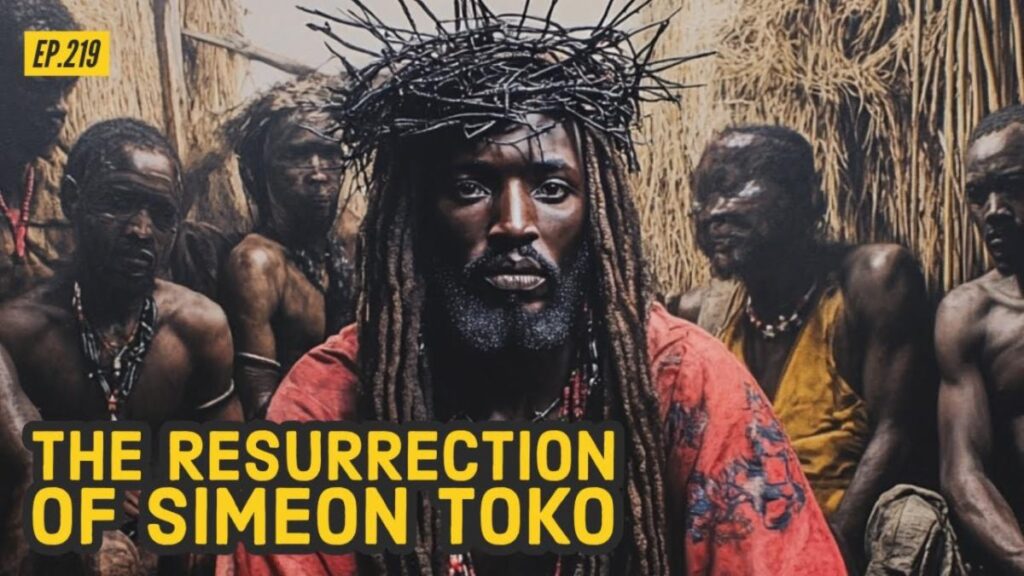
Suppressed and misunderstood by the global community, not many people are aware of the spectacular religious activity that has been thundering with incalculable exuberance through the hearts of millions of Africans in the last century. Men and women have been seeing vision after vision, sign after sign, and wonder after wonder. There are national holidays commemorating miracles—not from centuries ago by some old saint, but within the last few decades and witnessed by thousands of ordinary citizens still walking among us.
Simeon Toko, born on February 24, 1918, in the forebodingly named “Village of the Celestial Mountain” in northern Angola, emerged from an environment ravaged by natural disasters for nearly five decades. This enigmatic figure was not only a religious leader but also the founder of a spiritual movement that garnered significant attention and followers.
Toko’s life is filled with stories of miraculous healings. Accounts from his followers describe instances where the sick, the blind, and the paralyzed were healed through his touch or prayers. But perhaps the most striking miracle in Toko’s life was his survival of multiple assassination attempts. In one instance, Toko was shot but, instead of succumbing to the wounds, he appeared to recover inexplicably, with many believing it was a direct act of divine intervention, facilitated by Cherubim. These celestial beings, often seen as guardians of God’s throne, were believed to have shielded Toko from death, ensuring his mission could continue.
To this day, there has not been any viable explanation of why the genocidal Belgium, British and French army suddenly packed their bags after centuries of slavery and colonization and ran from Africa. Their claim was to suddenly grant independence to the nations in 1960, but the locals have a different story. Their account was that Toko summoned celestial beings who were 10-foot-tall humanoid looking angels to defeat the colonizers.
There is a striking resemblance in the stories of Obanita, Simeon Toko and the story of Jesu (known in the western world as Jesus).
The Rise and Fall of Empires
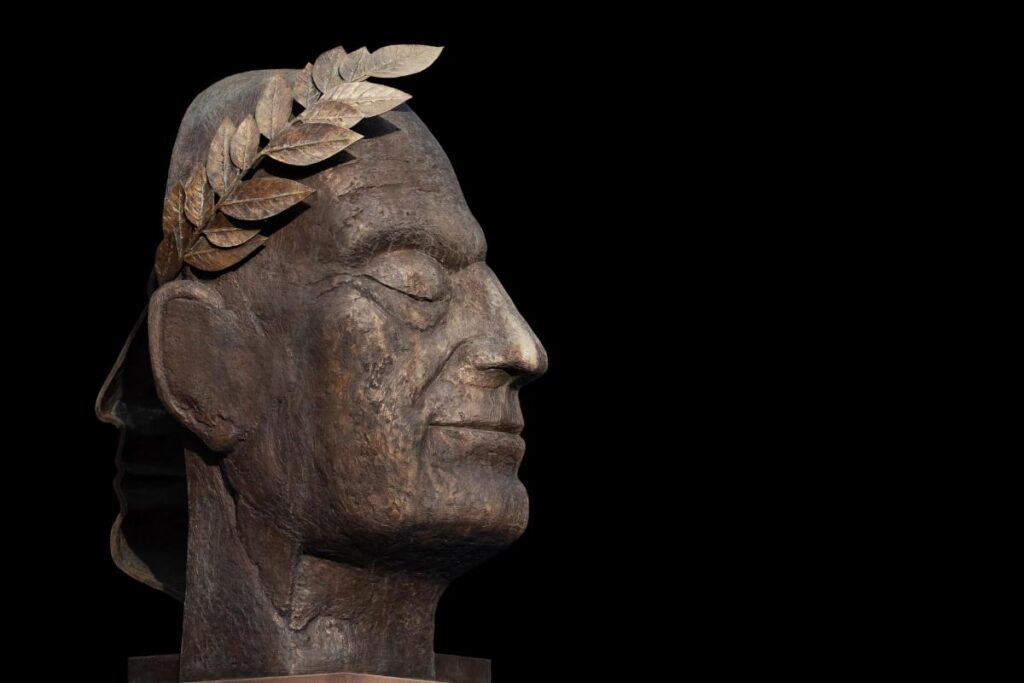
When one begins to understand the rise and fall of empires and the lessons learned therein, priorities will begin to shift. We know that material things, vanity, power and fame in the material world does nothing for the transcendence of the soul. The Africans have seen what really matters so they give to the greedy what the greedy would have. Maybe their true desire is to be like Obanita, Toko and Jesus.
According to the Sumerian Text, the physical world is real and important. Our experiences are real and important. The challenges we face, the suffering we endure, the choices we make, the relationships we build and break, the knowledge we acquire, and the capacities we develop all of this is real, and all of it matters. It matters because it is the field in which the divine spark within us is either developed or neglected.
The physical world matters because whether we succeed at the fundamental task of our existence, the development of our divine component toward the return journey depends on what we do with our time in material reality.
Death is the moment when the vessel either succeeds or fails at its fundamental purpose. If the divine spark within has been developed , clarified and prepared during the lifetime then in death, it can complete the journey it was designed for, returning to the source, carrying with the specific experiential content of a human life in material reality, the information that can only be gathered by a conscious being immersed in the full density of material existence.
If the life was lived entirely at the level of the Atemo, the ordinary consciousness, absorbed in material concerns, the divine component under developed in the connection to its source maintained only weakly then in death the divine spark cannot complete the return journey it becomes stranded in a sense between the material level, it cannot fully leave and the divine level it cannot fully reach.
There is a saying—“pride goes before the fall”, do we have the capacity to see what truly matters?
Yours Truly in Love and Light,
Khadijat Quadri, LCHMC, CHt